
Behind the Artwork: How a Frog Punk Studio Collection Comes Together
Every Frog Punk Studio collection starts with a simple idea. Sometimes it begins with a season, sometimes with an animal or a mood, and sometimes with one small detail that keeps sticking in my mind until it becomes the beginning of something bigger. A collection might start with a little frog in a garden, a stack of old books, a cozy autumn kitchen, a sleepy black cat, or a handful of wildflowers. From there, I start thinking about what kind of world that idea belongs in.
I try not to rush this part because the first idea usually sets the tone for everything that follows. Before I begin creating individual pieces, I think about the feeling I want the collection to have. Should it feel cozy, playful, old-fashioned, whimsical, elegant, quiet, or full of little details? Once that part feels clear, the rest of the collection becomes much easier to build.
Starting With the Mood
For me, the mood comes before the individual artwork. I usually begin by imagining the setting, colors, and textures that fit the idea. A fall collection might lean into warm caramel, cranberry, sage, and mustard, while a winter collection might feel softer and quieter with ivory, dusty blue, faded green, and a little sparkle. The colors help everything feel connected, even when the individual pieces are very different. A collection can include animals, flowers, objects, and little scenes, but if the palette stays consistent, the pieces still feel like they belong together.
I also think about how detailed the collection should be. Some themes work best with simple isolated elements, while others feel more complete when there are props, decorative pieces, or small scenes mixed in.
Finding Inspiration for Frog Punk Studio
Inspiration can come from almost anywhere. Sometimes it is a season, an old book, a garden, a color combination, a vintage object, or simply one small idea that will not leave me alone. I also pay attention to the kinds of subjects people are looking for and then think about how I can approach them in a way that still feels like Frog Punk Studio. The starting point changes from collection to collection, but I am usually looking for that one detail that makes me want to keep building the world around it.
Building the Collection Piece by Piece
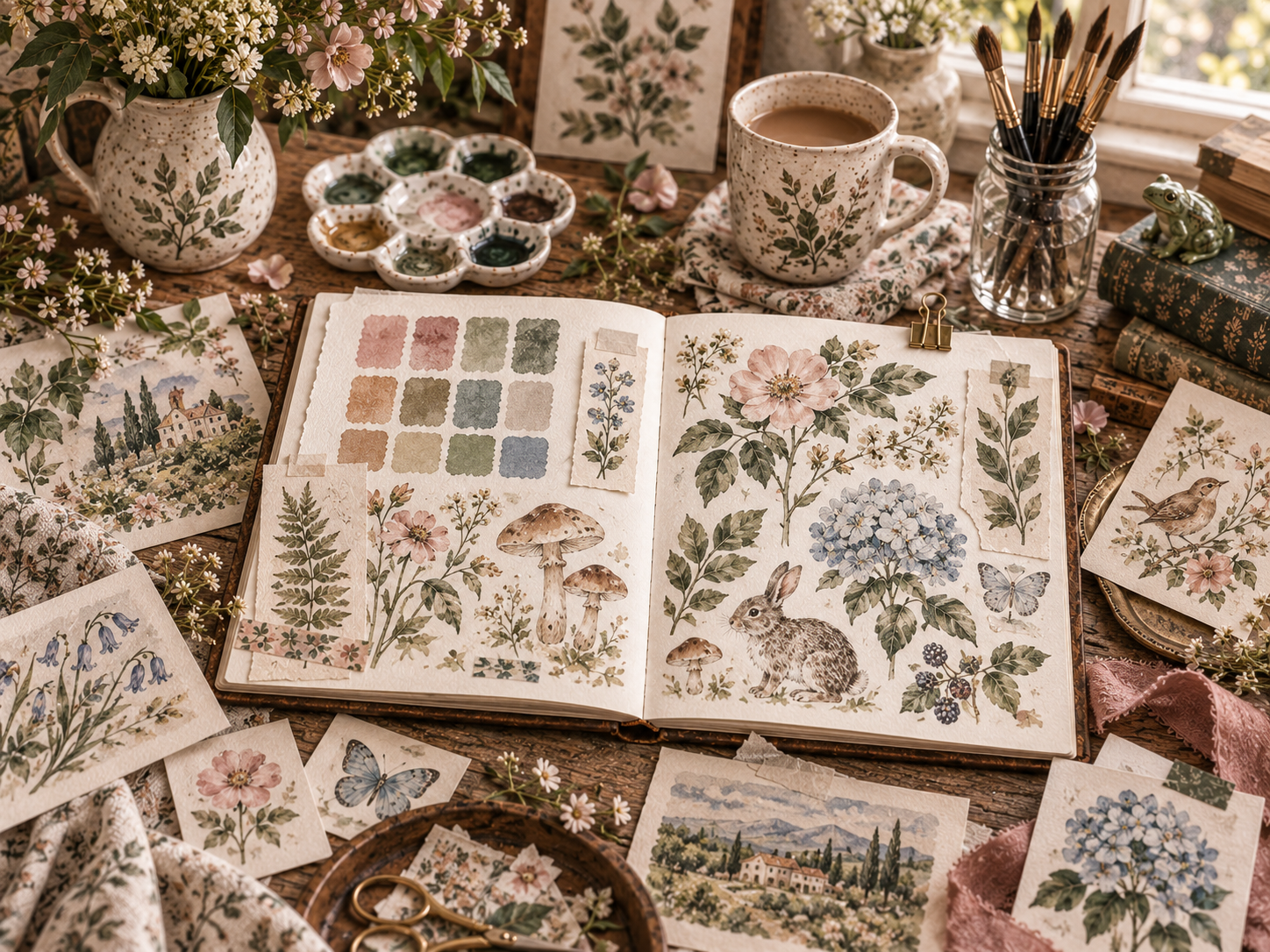
Once the overall direction is clear, I begin planning the individual pieces. This is where the collection starts to take shape. I usually want a good mix rather than creating the same type of image over and over again. If I am working on an animal collection, for example, I might include a few simple portraits, several animals holding or wearing something, and a few more decorative pieces with flowers, books, baskets, or seasonal objects. Variety matters because it gives people more ways to use the artwork. A single rabbit is useful, but a rabbit with flowers, a rabbit with a book, and a rabbit beside a little basket each create a different feeling and can work in different projects. At the same time, I try to make sure the pieces still look like they belong to the same family. The goal is variety without making the collection feel random.
Choosing the Little Details
The small details are often my favorite part. This is where I start adding the things that make a collection feel more like Frog Punk Studio. It might be a worn book, a tiny lantern, a floral mug, a stack of pumpkins, a berry branch, an old-fashioned ribbon, or a little mushroom tucked into the corner. Sometimes there is also a very small frog hiding somewhere he probably does not need to be. Those details do not always become the main focus of the artwork, but they help give the collection personality. They make the pieces feel a little more collected and a little less generic. I like artwork that feels as if there might be a story happening just outside the frame.
Keeping Everything Consistent
One of the trickier parts of creating a collection is making sure all of the artwork feels consistent from beginning to end. It is easy for a set to wander if the colors, level of detail, or style change too much along the way. I try to keep checking back to the original direction so that the final pieces feel like they were created together, even when they feature completely different subjects.
This is especially important with larger collections. The first piece and the last piece should still feel like they belong next to each other. Sometimes that means simplifying an idea that has become too complicated. Other times it means adjusting colors or changing a prop so it works better with the rest of the set. Not every idea that sounds good on its own belongs in the final collection.
Deciding What Makes the Final Set
I usually have more ideas than I actually need. That is a good problem to have, but it also means some pieces have to be left out. I look at the collection as a whole and ask whether each image adds something useful. If two pieces feel too similar, I may keep the stronger one and replace the other with something that adds more variety.
I also think about how someone might actually use the artwork. Is there a good mix of large focal pieces and smaller supporting elements? Are there enough different subjects? Can the pieces work together in cards, invitations, journals, pintables, or other projects? A collection should feel complete, but it should not feel like the same idea repeated thirty times. That editing stage is just as important as creating the artwork itself.
Making Room for a Little Personality
There is a practical side to building a collection, but I never want that to remove all of the personality. Some of my favorite pieces are the ones that make me smile a little while I am working on them. Maybe an animal looks especially pleased with itself, a ghost is carrying something ridiculous, or a frog has managed to appear in a place where no one invited him. Those moments are part of what makes the collection feel personal. I think people notice when artwork has a little bit of character in it. It does not have to be loud or silly. Sometimes one tiny unexpected detail is enough.
From Individual Pieces to a Finished Collection
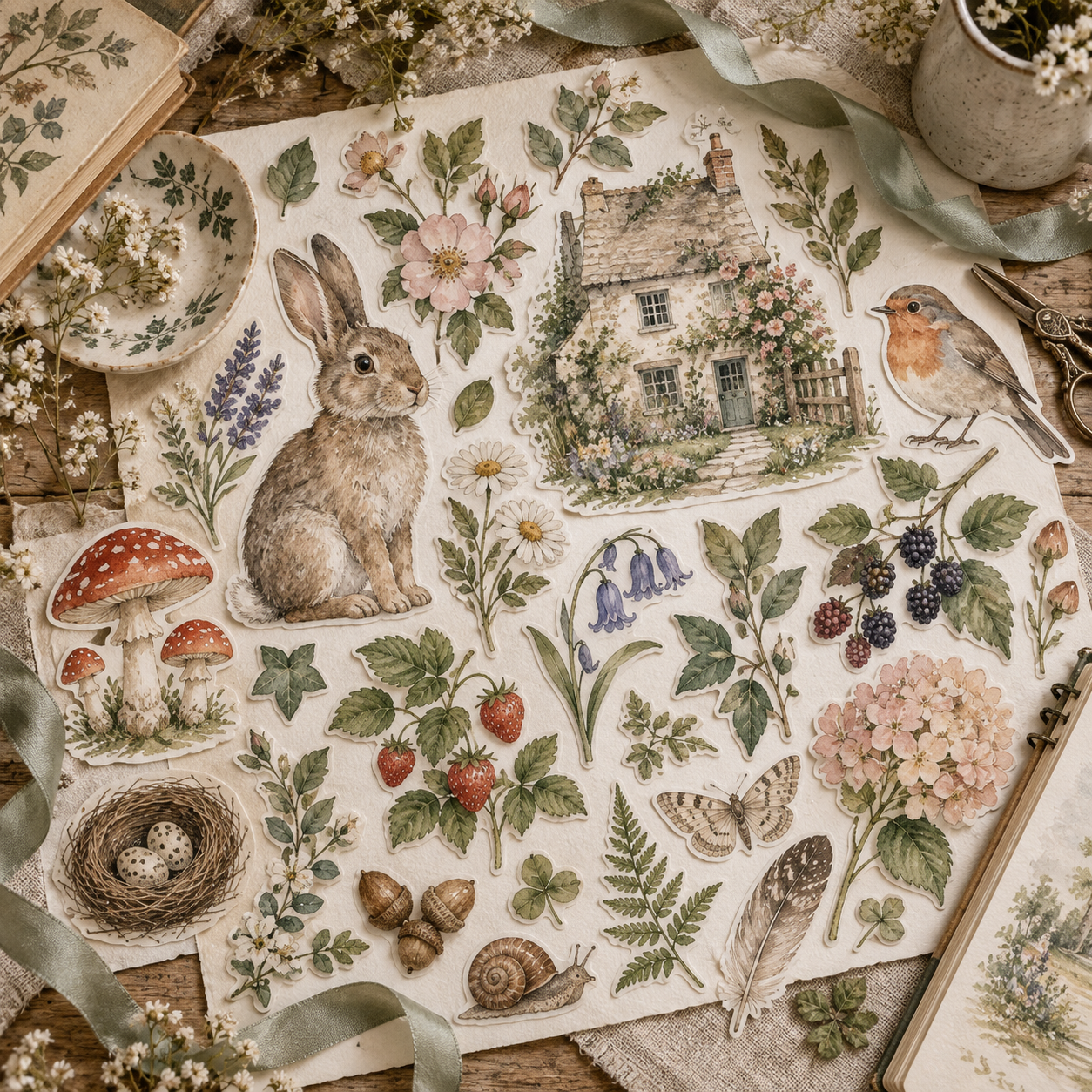
When all of the artwork is finished, I look at the collection together rather than piece by piece. This is usually the first time I can really see whether the original idea worked. I check the balance of colors, subjects, and shapes. I make sure there is enough variety and that nothing feels noticeably out of place. Sometimes one piece that seemed perfect on its own suddenly looks wrong beside everything else, so I may adjust or replace it. Once the collection feels balanced, it is ready to move into the next stage, where the artwork is organized, prepared, and turned into the final product. That part is less glamorous than painting flowers and tiny frogs, but it matters just as much.
Why I Like Working in Collections
Creating artwork in collections gives me a chance to build a small world instead of just making one image at a time. A single piece can be lovely, but a collection lets the idea grow. One cottage can lead to a garden, a cat on the porch, a stack of books by the window, flowers climbing the fence, and a tiny frog hiding under a leaf. Each piece adds another little part of the story. That is probably my favorite thing about the process. By the time a collection is finished, it often feels much bigger than the first idea that started it.
The Best Part Is Seeing What Happens Next
Once a collection leaves the studio, it stops being only mine. Someone might use the artwork on a card, in a scrapbook, on a classroom project, in a journal, or in something I never would have thought to make myself. I love that part because the artwork gets to keep changing depending on who is using it. I may begin with the colors, characters, and little details, but the finished project belongs to the person creating with them. And then, eventually, another small idea comes along, and the whole process begins again.
